








Marketing can no longer plan the future. It has to understand it.

There comes a moment in every industry when old models stop working. Marketing has already passed that moment – yet, due to inertia, we still behave as if it hasn’t. Strategies no longer last long enough to keep up with change. Campaigns are optimized in real time, while audiences fragment and evolve faster than teams can adopt new tools, platforms, and skills.
In such an environment, a key question emerges: how do we make good decisions in a world that changes faster than plans can keep up with?
This is where marketing futurism begins – not as a trend or a buzzword, but as a way of thinking. Futurism is not about prediction; it is a discipline that does not deal with “next year’s trends,” but with understanding the long-term forces shaping markets, culture, and human behavior. Its goal is not to predict the future, but to understand what is possible and how to prepare for it.
No crystal ball
Today, marketing agencies don’t offer just creative forecasts – they offer scenarios. Instead of asking “what will happen,” they ask “what if,” because companies need to see the bigger picture and prepare for multiple outcomes. In conditions of limited resources and pressure on results, this approach allows strategies and content to remain flexible and relevant in the future.
In practice, scenarios are not developed as additional ideas, but as a way to test an existing creative concept across different possible outcomes. An agency takes one concept and presents it through multiple possible futures; for example, how it would perform if consumer habits change, a new technology emerges, or sudden market disruptions occur.
This is presented to the client through short, concrete narratives or visualizations, allowing them to see how the same idea would look and behave in different contexts. The goal is not to find the “correct” scenario, but to demonstrate how flexible the concept is, where it is resilient, and where it would need to adapt. The essence is that a creative concept is no longer seen as a static idea, but as a system capable of functioning across multiple possible realities.
The illusion of technological omnipotence
One of the biggest misconceptions in modern marketing is the overreliance on technology without a deeper understanding of what truly drives people. AI, automation, and personalization are everywhere, yet audience fatigue is growing, trust is declining, and there is an increasing sense that brands are present – but not meaningfully relevant.
The key to understanding futurism lies precisely in the relationship between technology and people. Technology measures clicks, engagement, and time spent – but it does not fully “understand” context, culture, and the subtle social patterns and motivations behind decisions. Human insight – understanding habits, values, and expectations-remains essential for creating content that truly resonates.
That is why increasingly important questions include: how attention shifts in an oversaturated environment, where trust grows and where it declines, how algorithms influence loyalty and decision – making, when personalization truly helps and when it becomes intrusive, and how AI shapes brand perception and trust. Marketing futurism operates precisely at this intersection, connecting data, psychology, technology, and ethics.
Change does not happen overnight
It could be said that the future first appears at the margins. Major changes rarely arrive suddenly – most people simply ignore them or fail to recognize them until they become obvious. Generative AI, for instance, was foreshadowed for years through automation, personalization, and predictive analytics. The same applies to search, which is no longer limited to a single platform. Optimization today spans multiple channels and formats, from video platforms to voice and visual search.
This is why futurists observe small and agile teams, niche communities, experimental formats, and early regulatory signals. The approach is based on experimentation through pilot campaigns, A/B testing, controlled use of AI tools, and continuous testing of new channels – combining data with intuition.
Large companies may not use the term “futurism,” but they apply its principles. They anticipate audience behavior, adapt experiences in real time, and think long-term about relationships with users. IKEA, for example, uses augmented reality to allow customers to visualize products before purchase. Platforms like Amazon Ads and Facebook Ads already enable the creation of dynamic, personalized campaigns that adapt to user behavior in real time – which is also central to marketing futurism.
These companies do not merely react to market changes – they prepare for multiple versions of the future simultaneously, building resilience instead of dependence on a single channel, platform, or growth model.
Challenges and values
It is also important to critically examine “futurism” within large platforms. In many cases, it is not driven by understanding people, but by optimizing profit, control, and user attention. Algorithms that personalize content often affect user autonomy, while success is measured through engagement and growth rather than the quality of relationships with audiences. In this sense, futurism can become a tool of power – not just innovation.
The greatest value of marketing futurism lies in thoughtful reflection, not in merely reacting to current events. Instead of chasing fleeting novelties, futurism positions marketing as a strategic function that understands broader forces of change and their long-term implications for brands, organizations, and society as a whole.
Marketing that thinks ahead
In a time when the future can no longer be planned linearly, the key competence becomes the ability to understand uncertainty. Marketing futurism can help organizations move from reactive behavior to strategic insight and deeper contextual awareness. And the question is no longer whether the industry will change; because marketing that fails to see the bigger picture won’t just get the tactics wrong – it will fall out of step with the future.

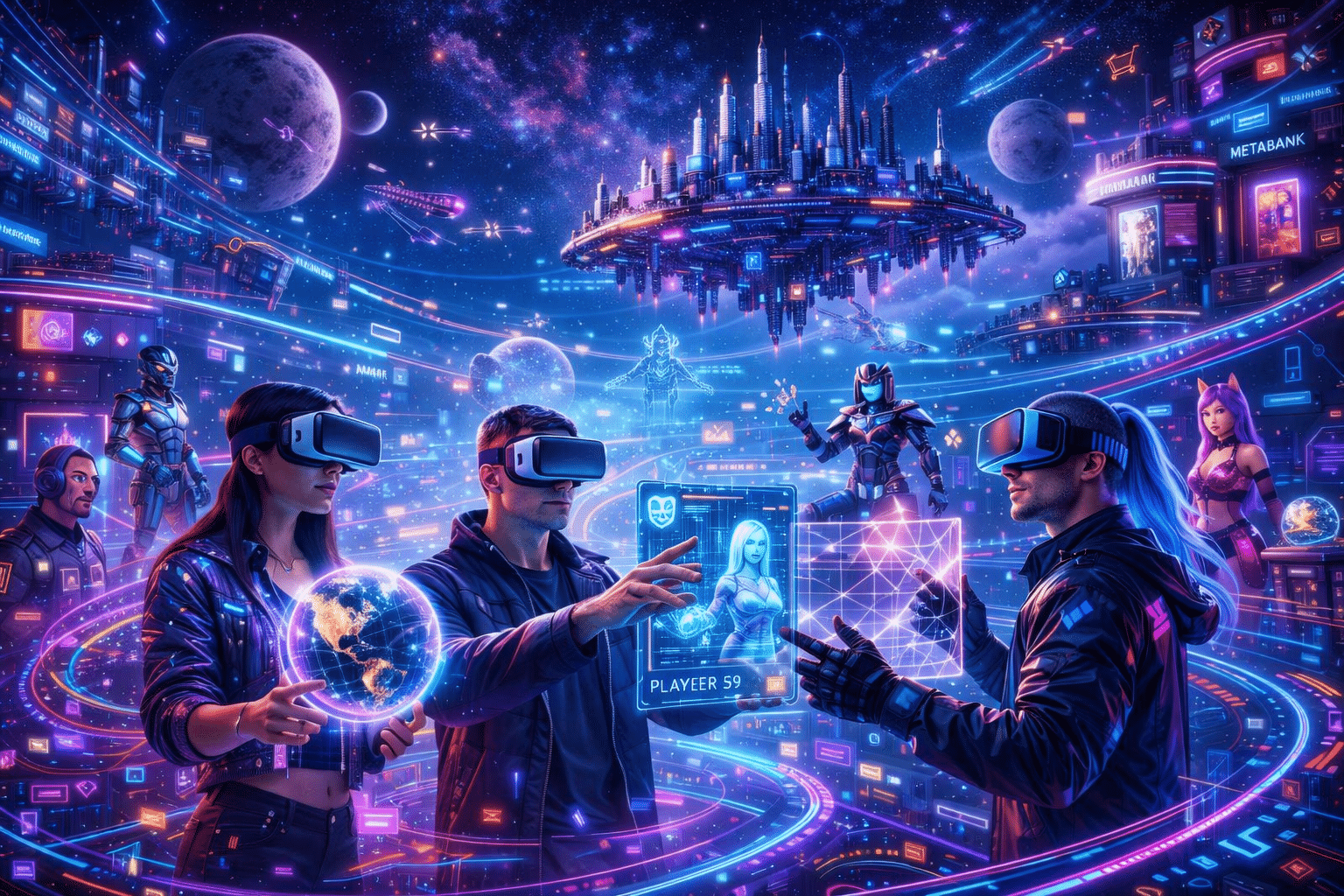
Meanwhile, in the Metaverse…
Just a few years ago, it seemed that the entire tech world had embraced the idea of the metaverse as the inevitable future of the internet. Facebook, under the leadership of Mark Zuckerberg, went the furthest— in 2021 the company changed its name to Meta, clearly signaling a new strategy focused on building virtual, three-dimensional […]

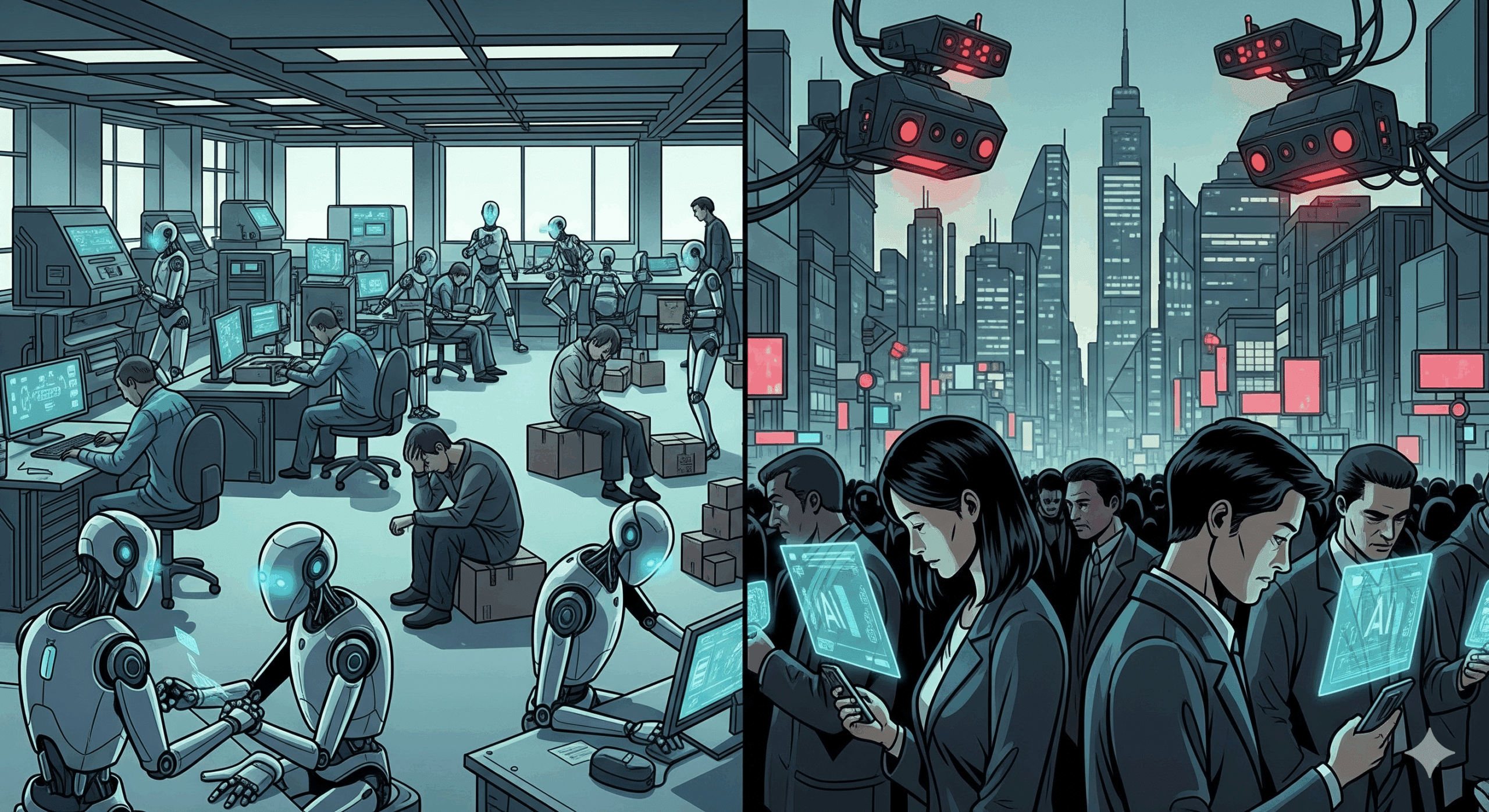
AI: A New Renaissance or the Fall of Civilization?
Artificial intelligence is already deeply embedded in our daily lives – in our phones, on screens, in workplaces, universities, and medicine. It helps us work faster, more accurately, and more intelligently, opening doors to new possibilities. However, while many celebrate its potential, a growing number of experts warn that we may be rushing toward something […]
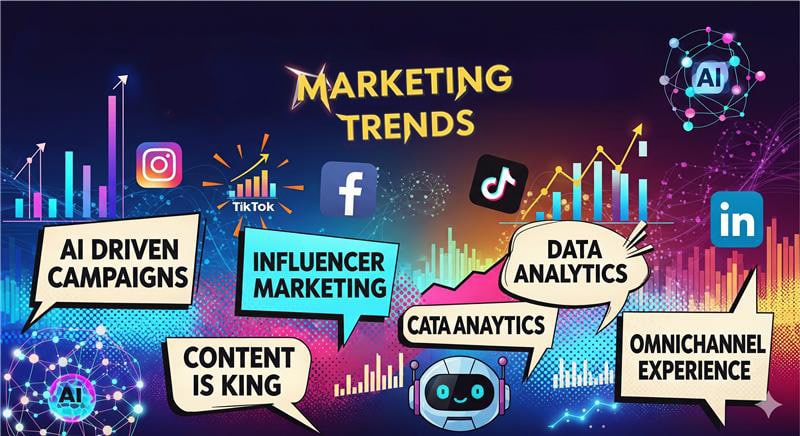
Marketing trends: The new rules of the game
The near future brings significant changes to the world of marketing, with a focus on technological innovations and the evolution of consumer preferences. Experts predict that content personalization will become a key element for creating engaging experiences, while artificial intelligence will greatly shape marketing strategies, changing the way brands communicate with their audiences. 🤖 […]