








Meanwhile, in the Metaverse…


Just a few years ago, it seemed that the entire tech world had embraced the idea of the metaverse as the inevitable future of the internet. Facebook, under the leadership of Mark Zuckerberg, went the furthest— in 2021 the company changed its name to Meta, clearly signaling a new strategy focused on building virtual, three-dimensional worlds where people would work, learn, socialize, and spend a significant portion of their time.
However, a few years later, after tens of billions of dollars had been spent, it became clear that this vision had run into serious obstacles—technological, market-related, and human. What was imagined as the next great technological leap is now often described as one of the most expensive and problematic investments in the modern tech sector.
Massive investments, limited returns
Through its Reality Labs business unit, Meta accumulated losses for years. These stemmed from the development of VR (virtual reality), AR (augmented reality), hardware such as Quest headsets, and the digital platform Horizon Worlds itself. According to available reports, from 2021 through the end of 2025 the company accumulated more than 70 billion dollars in losses—a sum many companies can only dream of earning over their entire lifetime, let alone spending without a clear and relatively quick return on investment.
In practice, the envisioned metaworld under Zuckerberg’s direction failed to attract a significant number of active users or to offer a sufficiently compelling reason for people to leave the screens of their phones and laptops and “move” into virtual environments. Technological limitations of VR and AR systems, the high cost of devices, and a lack of appealing content further slowed adoption. Some estimates even suggested that certain metaverse platforms had only dozens or hundreds of active users—far below the expectations of the public and investors who were counting on millions.
Shifting focus and capital
As a consequence of these results, Meta has begun to significantly scale back investments in metaverse projects. According to Reuters, a reduction of the Reality Labs budget by around 30% is planned for 2026, which includes cost cuts and potential layoffs. At the same time, part of the capital is being redirected toward the development of artificial intelligence and wearable technologies, such as AI glasses and other wearable devices.
How painful this experience has been is best illustrated by the fact that Meta has almost completely stopped using the term “metaverse” in key public presentations and financial events, instead focusing on areas that currently generate real revenue or have clearer prospects for practical application.
This is not merely a bureaucratic reorganization, but a shift in the entire strategic paradigm. Instead of investing in abstract virtual worlds with no proven market value, Meta today prioritizes areas with faster and more predictable returns on investment—above all artificial intelligence, advanced software platforms, and new hardware formats.
Investments in AI
Mark Zuckerberg’s company is now strongly focused on the development of artificial intelligence as the central pillar of its future growth strategy and technological leadership. This includes massive investments in AI infrastructure, data centers, specialized hardware, and top-tier engineers, with the goal of integrating AI into all key company products—from Facebook and Instagram to WhatsApp and the Meta AI assistant.
During 2025, Meta invested more than 65 billion dollars in AI infrastructure and related capacities, significantly more than in previous years. Projections for 2026 point to an even more ambitious budget—over 70 billion dollars, with some sources mentioning figures as high as 90 billion. Such investments are part of a broader industry race in which tech giants are spending hundreds of billions of dollars to develop advanced AI models, improve products, and maintain a competitive edge. To secure sufficient electricity and energy for these ambitions, Meta has begun signing multi-year nuclear power purchase agreements with nuclear plants in the United States.
A grand idea is not enough
Pulling back from intensive investments in the metaverse does not necessarily mean that the idea itself is dead. Rather, reality has shown how difficult it is to turn visionary concepts into commercially successful products if users do not see immediate value. The metaverse still has potential in certain niches—especially in gaming, training, and simulations—but it has not become a digital world that people use on a daily basis.
In that sense, Meta has learned some lessons the hard way. A vision, no matter how ambitious or futuristic, must be supported by genuine user interest. Without mass adoption and sustainable monetization, even the most technologically powerful projects become a financial burden.
And one more thing. When the idea of the metaverse was launched in 2021, pandemic measures and fear of COVID-19 were still keeping much of the global population confined to their homes, making virtual spaces—including the metaverse—seem like a necessary refuge. Today, as fear of the virus has largely faded and people have fully returned to regular life and physical experiences, the need for digital gatherings is simply no longer as pronounced.
Lessons for investors and future creators
The adoption of major technological ideas requires time, but also clear practical value. If a platform or device does not solve a concrete problem or bring a tangible improvement to the user experience, mass adoption remains unlikely. This case shows that even the greatest visionaries cannot ignore market reality.
Strategic pivots are not unusual — companies often adjust their focus to what delivers results at a given moment, as Meta is now doing by shifting toward AI and wearable technologies. For now, the metaverse has remained more of a technological concept than a successful product. Investments were enormous, results limited, and reality unforgiving: the market is not yet ready for what the biggest tech companies envisioned. This is not just a story about a single project, but a broader lesson about how hype, vision, and real value rarely go hand in hand.
In a broader context, the metaverse as an idea still exists, but it is transforming—from “the next big thing” into a series of smaller, more specific applications that are developing more slowly, more realistically, and with far less media hype. For investors and creators of the future, the message is clear: the market, users, and real value are always more important than futuristic promises.

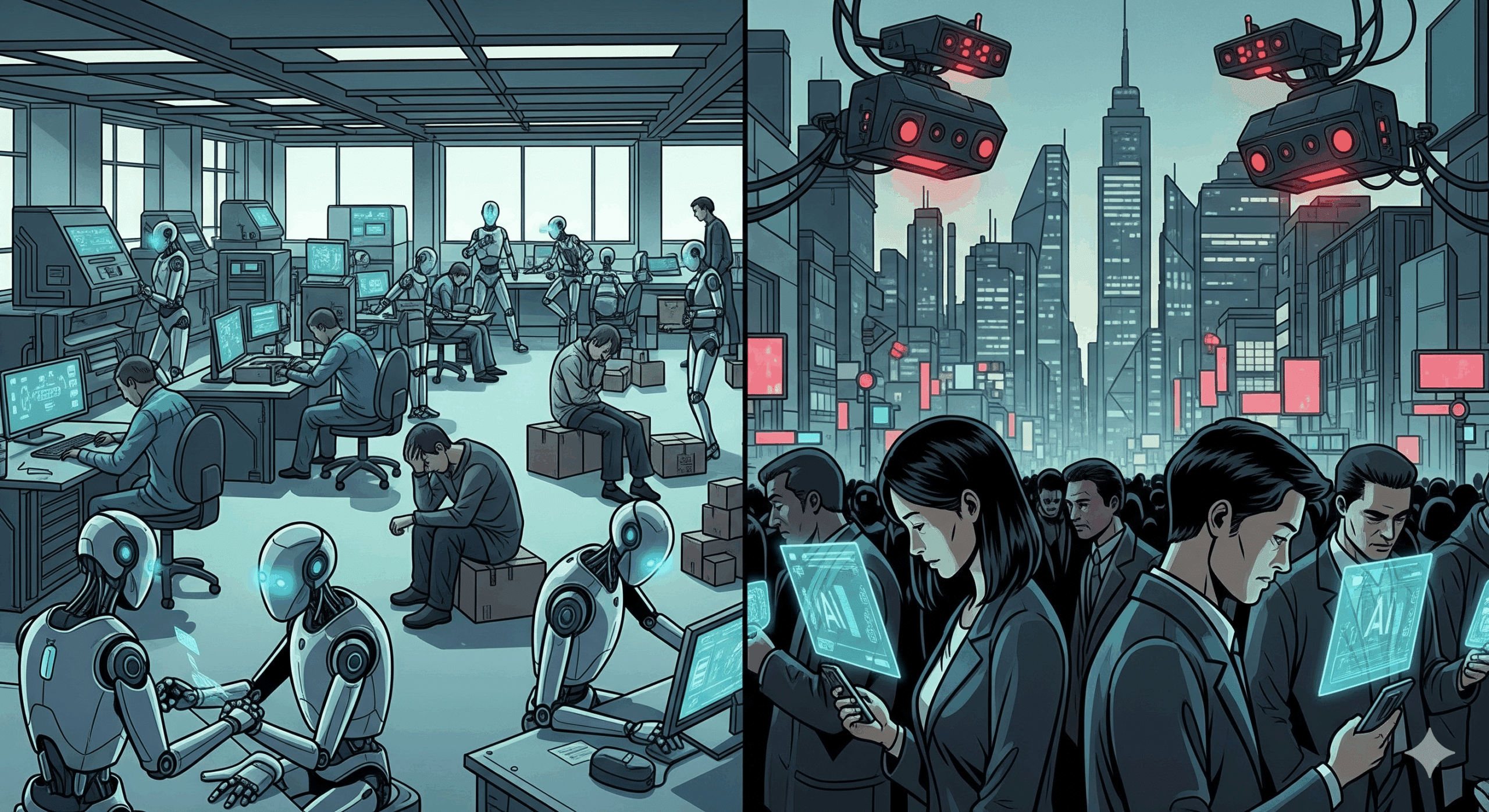
AI: A New Renaissance or the Fall of Civilization?
Artificial intelligence is already deeply embedded in our daily lives – in our phones, on screens, in workplaces, universities, and medicine. It helps us work faster, more accurately, and more intelligently, opening doors to new possibilities. However, while many celebrate its potential, a growing number of experts warn that we may be rushing toward something […]

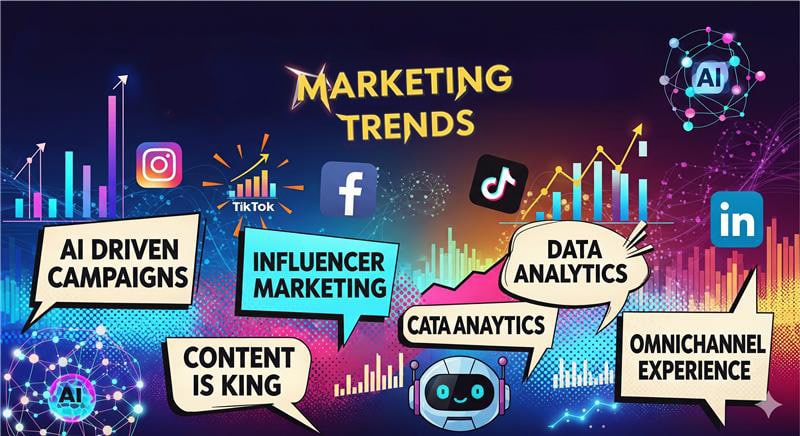
Marketing trends: The new rules of the game
The near future brings significant changes to the world of marketing, with a focus on technological innovations and the evolution of consumer preferences. Experts predict that content personalization will become a key element for creating engaging experiences, while artificial intelligence will greatly shape marketing strategies, changing the way brands communicate with their audiences. 🤖 […]

TECHNOLOGIES AND ETHICS: SUPERCIUK’S TENDENCIES
Anyone who has read the comic Alan Ford will remember the legendary antihero Superciuk, whose modus operandi and street activism ironically reflect the image of contemporary society. Superciuk, this self-proclaimed “fighter against the system,” actually acts in direct contrast to what one would expect from a “good” hero – he steals from the poor to […]