








Experience Designers and Curators of Emotion


How technology shapes the soul and logistics of the events industry?
Modern event management is moving far beyond mere form-filling, evolving instead into the strategic orchestration of emotion and audience dynamics. Through a blend of creativity, compelling narrative, design, and cutting-edge technology, space and moments are transformed into immersive experiences that engage all the senses.
Today, artificial intelligence is no longer just a flashy attraction, but a standard “copilot” that manages complex logistics, analyzes crowd flow, and drives smart matchmaking. Algorithms help create and balance budgets, solve logistical challenges, and proactively mitigate potential risks. Consequently, event organizers are stepping into a new role: becoming experience designers and curators of emotion.
Managing Cognitive Load
In a world where technology can project virtually anything, the modern organizer’s biggest challenge is no longer how to attract attention, but how to prevent sensory overload and balance focus in an era of hyper-stimulation.
A prime example is the MSG Sphere in Las Vegas. Its interior screen spans 15,000 square meters in 16K resolution, enveloping the audience from a height of 73 meters with over 250 million pixels. While it is easy to fascinate people with such performance metrics, it is even easier to exhaust them.
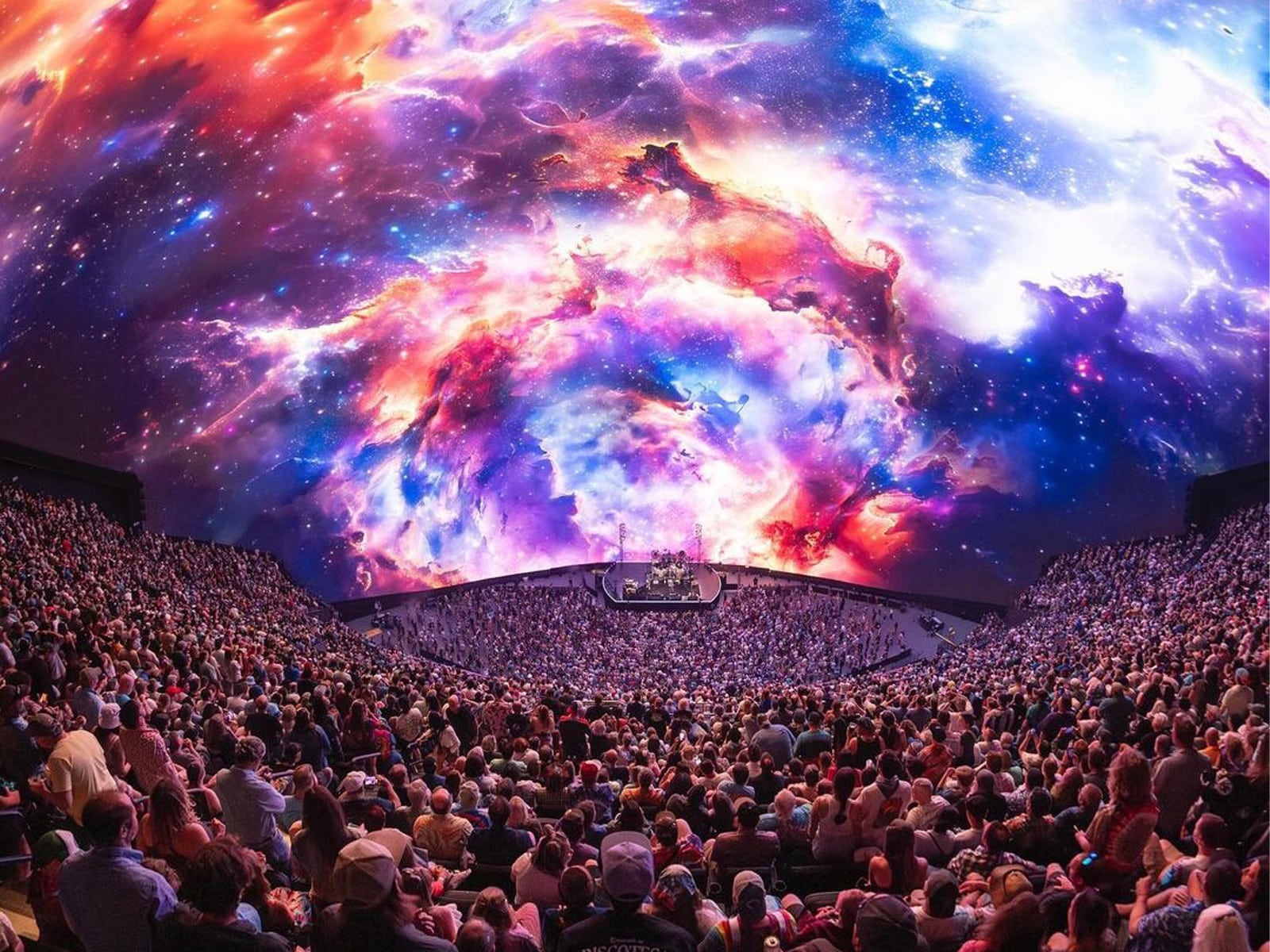
An experienced organizer today uses real-time data not to pile on more visual stimuli, but to intelligently manage energy within the space. Instead of linear scheduling and rigid timetables, the focus shifts to the strategic stewardship of attention and event dynamics. If audience analytics systems signal a drop in focus and fatigue in the room, the organizer can seamlessly adjust lighting intensity, audio frequencies, or the rhythm of the program. The event isn’t interrupted, but the audience’s attention is gently guided back to an optimal state. This is the subtle direction of human presence – a new, essential competency increasingly demanded of event professionals.
The New Engineering of Relationships
We all remember traditional networking: moments where hundreds of people awkwardly mingle and exchange business cards, hoping to randomly bump into the right person. The future of the industry introduces a new architecture built around targeted micro-moments.
Take Europe’s Web Summit, for example, which utilizes its proprietary software, Summit Engine. This ecosystem handles ticket sales, registration, and personalized attendee schedules under one roof. Its greatest value lies in smart networking: the system leverages advanced databases and AI to automatically recognize participant profiles, map out thousands of attendees, and connect promising startups with ideal investors, subtly guiding compatible participants to the same zone through tailored notifications. In doing so, technology transforms the logistical chaos of a massive conference into a seamless digital experience.
Digital Ecosystems
Contemporary metaverse events increasingly resemble living, three-dimensional digital ecosystems. Participants no longer join via standard video calls; instead, they create photorealistic avatars that move freely through virtual spaces.
A standout example is the Journee platform, built on Unreal Engine 5 and renowned for creating virtual worlds for brands like BMW and major fashion houses. Through pixel-streaming technology, visitors can jump straight into photorealistic virtual spaces from ordinary phones or computers, requiring no expensive hardware. Once there, they walk around as avatars and converse naturally thanks to spatial audio that only kicks in when they physically approach one another, just like in real life.
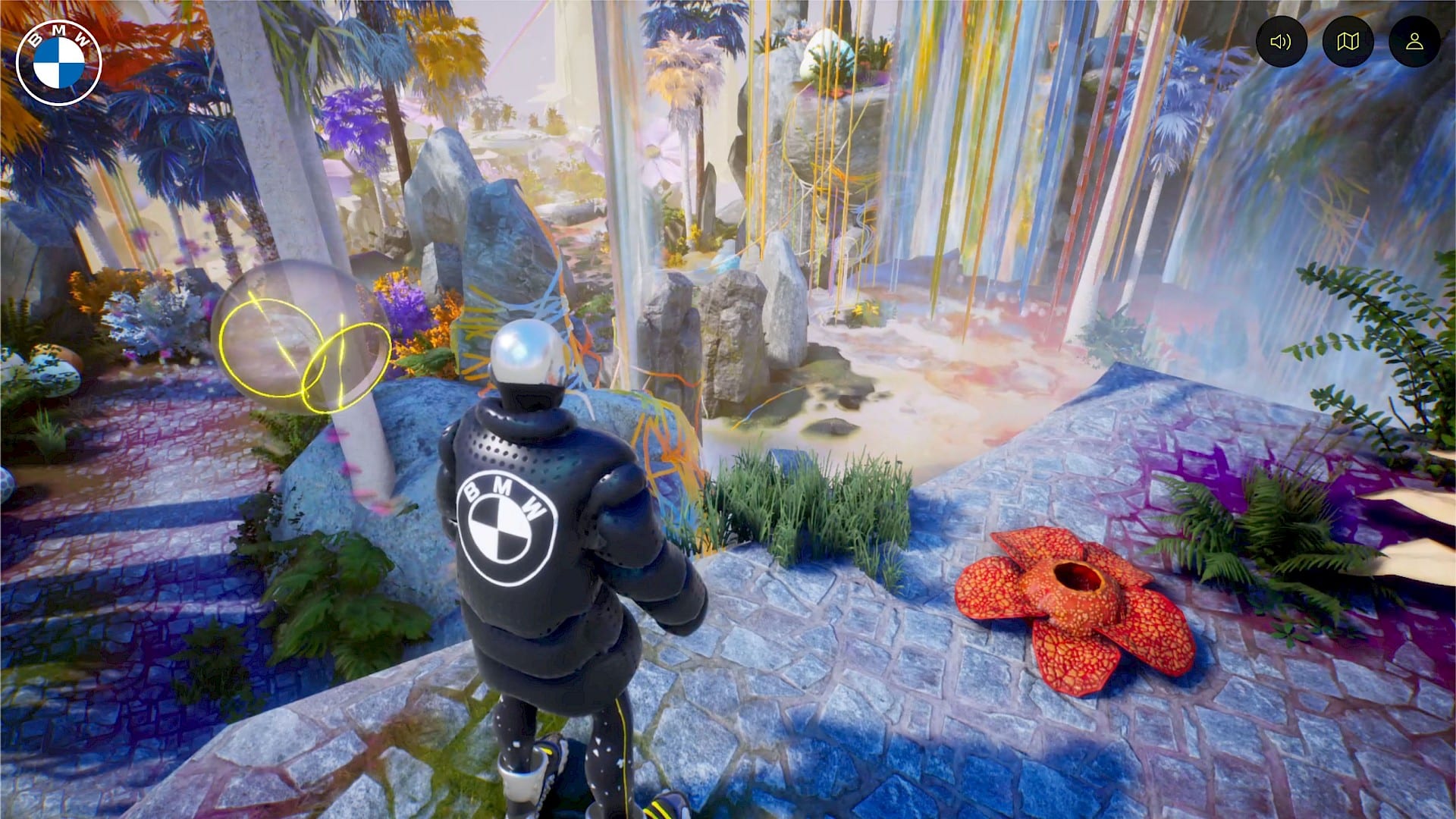
Simultaneously, background AI analyzes visitor movements in real time, shaping visual effects and fluid sculptures to match the crowd’s atmosphere. This technology has long outgrown its experimental phase and is now widely adopted for hybrid and online events, product launches, and exclusive forums.
The Luxury of the Analog Sanctuary
From this emerges the ultimate paradox of the digital age: at the exact moment technology can replicate any environment, its complete absence becomes the ultimate luxury.
Exclusive global forums and closed-door leadership sessions are increasingly opting for systems that physically prevent smartphone use. The Yondr pouch – a magnetically locking sleeve that keeps your phone with you but out of reach – has become a fixture in the live events industry. To date, over 20 million devices across more than 10,000 events have used this system, trusted by performers like Bob Dylan, Madonna, and Paul McCartney.
The task of the modern experience designer is to intentionally architect these “analog sanctuaries” – zones where all digital signals are actively blocked. Here, the audience ceases to be passive observers and becomes active creators of the moment: through voting, body movements, or real-time collaborative decision-making, they directly influence the direction of a panel, the outcome of a workshop, or the very look of the room.
When Optimization Becomes Manipulation
The transformation of this profession boils down to the ability to synchronize technological, spatial, and ambient tools in real time, turning them into a mechanism that evokes the desired psychological and emotional state within the audience.
However, a risk remains: in our pursuit of the perfectly optimized experience, we risk dehumanizing the gatherings themselves. If AI pre-calculates who we should talk to, sensors subtly modify the environment based on our heart rates, and algorithms eliminate every trace of unpredictability – where is the room for authentic human spontaneity?
When technology takes over decisions about what we listen to, how we feel, and who we shake hands with, events can easily slip from spaces of free exchange into sophisticated attention-manipulation machines. Therefore, the greatest skill for tomorrow’s organizers will not be figuring out how to implement technology, but knowing where to draw the line – preserving precious, unpredictable human imperfection as the most valuable element of any gathering.


WE WORK 7 HOURS A DAY. AND EVERYTHING’S FINE.
Our working day lasts seven hours. That’s enough. It wasn’t born out of some grand HR strategy, at the height of the employer branding craze, nor did a presentation titled The Future of Work suddenly land in everyone’s inbox one Monday morning. It happened much more simply than that. During the pandemic, our […]

Marketing can no longer plan the future. It has to understand it.
There comes a moment in every industry when old models stop working. Marketing has already passed that moment – yet, due to inertia, we still behave as if it hasn’t. Strategies no longer last long enough to keep up with change. Campaigns are optimized in real time, while audiences fragment and evolve faster than teams […]
Meanwhile, in the Metaverse…
Just a few years ago, it seemed that the entire tech world had embraced the idea of the metaverse as the inevitable future of the internet. Facebook, under the leadership of Mark Zuckerberg, went the furthest— in 2021 the company changed its name to Meta, clearly signaling a new strategy focused on building virtual, three-dimensional […]