







WHAT REMAINS WHEN THE NOISE IS REDUCED?


An interview that, through the experiences of M2Communications, maps out key decisions from 2025—from long-term partnerships and organizational maturity, through creative risk and strategic focus, to shifts in communication and plans for international growth in 2026.
Too many processes designed for control, too many “loud” messages competing for attention, and too little genuine curiosity to step outside familiar patterns. In this context, the conversation with the M2Communications team doesn’t begin with campaigns, but with decisions that are rarely celebrated: selectivity over expansion, long-term partnerships over constant acquisition, and the willingness to say “no,” even when it may seem like a short-term loss.
For this agency, 2025 was a year of organizational maturation, under the pressure of rising talent expectations, increasingly complex international projects, and the need for culture to stop being a narrative and become an operating system. On a creative level, this conversation opens questions the industry keeps postponing. Why are we still afraid of the unknown and the unexpected? Why do we choose safety over curiosity? And why do we still assume consumers want more noise, when they are increasingly showing us they want communication that respects their attention as a limited resource?
Miro Antić, CEO and Managing Director; Nikolina Popović, Executive Creative Director; Milena Mišić, Head of Strategy; Milena Banović, Managing Director and Culture Lead; and Milica Katić, Account Director and Client Service Lead speak about a year in which strategic focus, people development, organizational structure, and client relationships stopped being separate topics. Instead, they became interdependent systems in which selectivity is not a weakness, culture is not a “soft” topic, and trust is built through consistency rather than performance.
Miro Antić – CEO / Managing Director
If you had to summarize 2025 in one strategic decision you would make again, and one you would make completely differently today—what would those two “plot twists” be?
The key strategic decision was focusing on long-term partnerships with brands that share our values, alongside clear continuity in acquiring priority projects. At the same time, an equally important part of our strategy has been continuous investment in developing the team’s creative skills, as well as building a motivation and evaluation system based on qualitative KPIs. What we would do differently today is take a more selective approach to pitches: fewer entries, clearer criteria, smarter resource allocation, and full creative focus on projects with the greatest strategic and reputational impact.
What pushed your agency to grow up the most this year, and what made you play like a child again?
In 2025, we “grew up” the most through challenges brought by rising talent expectations, improved working conditions, more flexible models like remote environments, and the need to find new ways to motivate employees long-term. At the same time, we further strengthened our company culture, nurtured our core values, and clearly defined behavioral standards, while continuously developing as an organization through increasingly complex international projects and demands from major clients. What always brought us back to “child mode” were company gatherings and internal creative workshops—and sometimes concepts we developed without a brief, driven purely by curiosity and a passion for ideas.
If the Adriatic industry were a publicly traded company, what rating would you give it entering 2026, and why should investors (or shouldn’t they) hold onto their shares?
I would give the Adriatic industry a “buy” rating—courage is definitely there, ideas are strong, and talent is becoming increasingly visible on the international stage. We still lag behind most European markets in terms of scale and budgets, but that leaves significant room for growth. The region is gradually becoming a hub of activity, especially ahead of major events like EXPO 2027 in Belgrade, which will further accelerate industry development and open doors to global projects and investments. With an increasingly strong talent pool and growing export of creative services, we are no longer talking about potential, but about a market ready for a serious leap forward.
Nikolina Popović – Executive Creative Director / Creative Director
Which idea in 2025 made you stand up and say, “Okay, this is why I still do this job”?
Ideas that emerge during my lectures with master’s students in Italy—those moments when you see they’ve connected intuition and structure for the first time. When you witness thinking without fear of mistakes or the need to please anyone. That’s the moment that reminds you why you’re still in this profession.
What was your biggest creative risk this year, and did it pay off in the way you expected—or in a way you couldn’t have predicted?
The biggest creative risk was simplifying to the point of discomfort and removing all the “safe” layers. It paid off—but not in the way I expected. It changed internal processes and ways of thinking more than the final outcome itself.
What creative weakness does the regional industry keep hiding, and what would you do if tasked with exposing it in 2026?
The industry persistently hides its fear of the unknown and the unexpected, often choosing safety over curiosity. If I were to expose that weakness in 2026, I would shift the focus from control to courage and open space for experimentation, mistakes, and learning.
Milena Mišić – Head of Strategy / Strategic Planner
Which common assumption about consumers did you have to “break with a hammer” in 2025 because it was no longer true?
One assumption we had to “break with a hammer” in 2025 was that consumers respond primarily to promotions, activations, and loud messaging. In practice, that approach is working less and less. Consumers are saturated with similar mechanics, visual “shouting,” and short-term incentives. That’s why we shifted focus with brands toward longer, more meaningful, and more consistent communication—sometimes quieter, but more authentic. This kind of approach, delivered through subtler formats and in unexpected places, often had a deeper impact than traditional promotional activations.
If you had to predict one psychological shift in audiences in 2026 that will most change communication, what would it be—and why is it invisible until it happens?
One of the key psychological shifts in 2026 will be the growing awareness that attention is a limited resource that needs to be protected, not spent. Because of this, brands will no longer be able to assume a right to consumers’ mental space—they will have to earn it. This shift is invisible because its effects are not seen in performance metrics, but in which brands remain mentally present and which gradually disappear from audience awareness.
Milena Banović – Managing Director / Culture Lead
What new skill, habit, or ritual within your team this year could be labeled as “born in the Adriatic industry”—something that doesn’t exist anywhere else?
This year, I would highlight creative workshops in unconventional locations—from culinary experiences and yachting to entirely new spaces we hadn’t used before. These weren’t just workshops, but part of our experience design approach to people development, where we test methodologies through personal experience that we later apply in client work. In this way, we build a culture of learning through practice, connect through authentic and emotional moments, and consciously push the boundaries of the traditional creative process.
Milica Katić – Account Director / Client Service Lead
What was the most unexpected sentence you heard from a client this year, and how did it change your brief, campaign, or relationship?
We were working on an extremely complex project, with no room for error, for a long-standing client known for high standards and clearly defined expectations. We came to the meeting with a proposed solution, ready for detailed questions and the usual round of revisions. Instead, the response was simple and unexpected: “You have full freedom—I trust you.” That sentence didn’t change the brief, but it significantly changed the dynamics of collaboration. It was a clear signal that, through years of consistent work, responsibility, and shared success, true professional trust had been built.
From that moment, the relationship naturally evolved from a traditional client-agency dynamic into a genuine partnership. For me, it was a powerful confirmation that trust is the greatest value an agency can receive from a client—and a responsibility it must live up to. Such a relationship not only resulted in a better solution for that specific project, but also positively influenced how we build collaborations with other clients, reminding us that the best results are always the product of mutual trust, openness, and respect.
If someone offered you the chance to begin 2026 with a single “act of courage”—professional, creative, or personal—that would push you out of your comfort zone and move the industry forward, which act would you choose, and why?
Miro Antić – CEO / Managing Director
This is a complex question that requires deeper reflection, but if I had to highlight one act of courage, it would be expanding into larger international markets by opening new offices. Such a move involves stepping out of a familiar zone, taking on greater financial risks, facing stronger competition and different business cultures—but these are precisely the kinds of steps that can drive serious growth and accelerate the adoption of new knowledge and technologies, leading the agency through long-term transformation. At the same time, I see this step as an opportunity to build an open creative ecosystem through collaboration with other agencies, talents outside the industry, and smart integration of AI—because the future of advertising lies in the synergy of different worlds.
Milena Banović – Managing Director / Culture Lead
Systematically empowering an entrepreneurial spirit within the agency is, in my view, one of the key acts of courage. Through internal idea incubators, shared ownership models over projects, and clearly defined development paths for those who want to take on greater responsibility, we create space for personal and professional growth. This implies a shift in mindset and embracing risk, mistakes, and failure as integral parts of the process—but I believe this approach builds responsibility, confidence, and long-term team loyalty. I see the future of the industry in people who think like entrepreneurs, even when they work within an agency.
(This text was originally published on the Media Marketing portal)


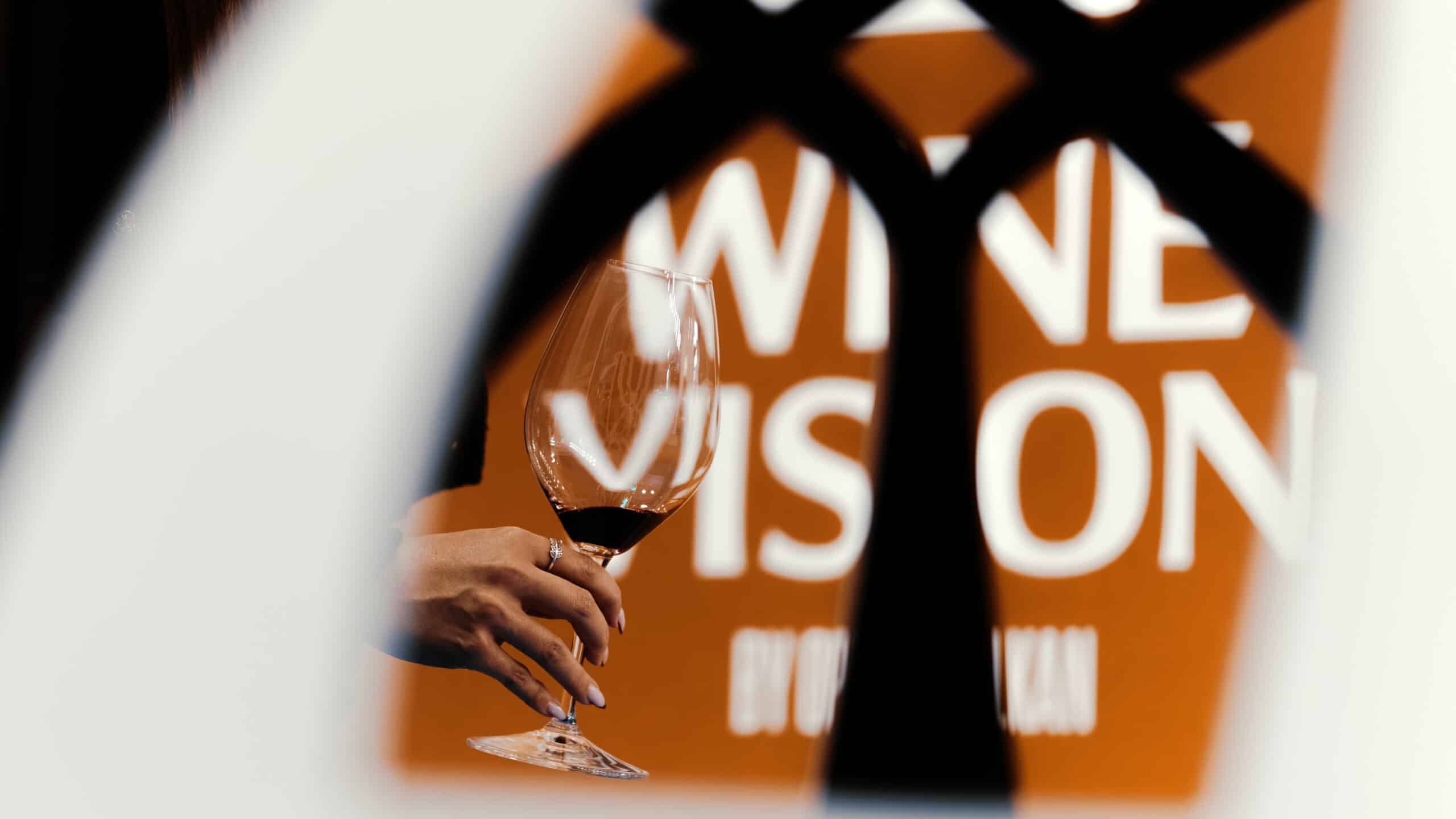
WVOB 2025: EPICENTER OF THE WINE EXPERIENCE
From November 22 to 25, 2025, the 4th International Fair of Wine, Food, Rakija and Tourism Wine Vision by Open Balkan was held in Belgrade — one of the largest and most significant wine and gastronomic events in Europe. We are pleased to highlight that this year, as well, we were officially entrusted with the […]

WE’VE WON GOLD AT THE EVENTEX AWARDS!
Project BURO. Desert Rose won gold in the Events/Gala category at the prestigious 15th edition of the Global Eventex Awards, the most renowned international festival in the field of Event & Experience Marketing. Eventex Awards are considered the highest recognition in the event industry, and this year’s festival broke all records with 1,239 […]
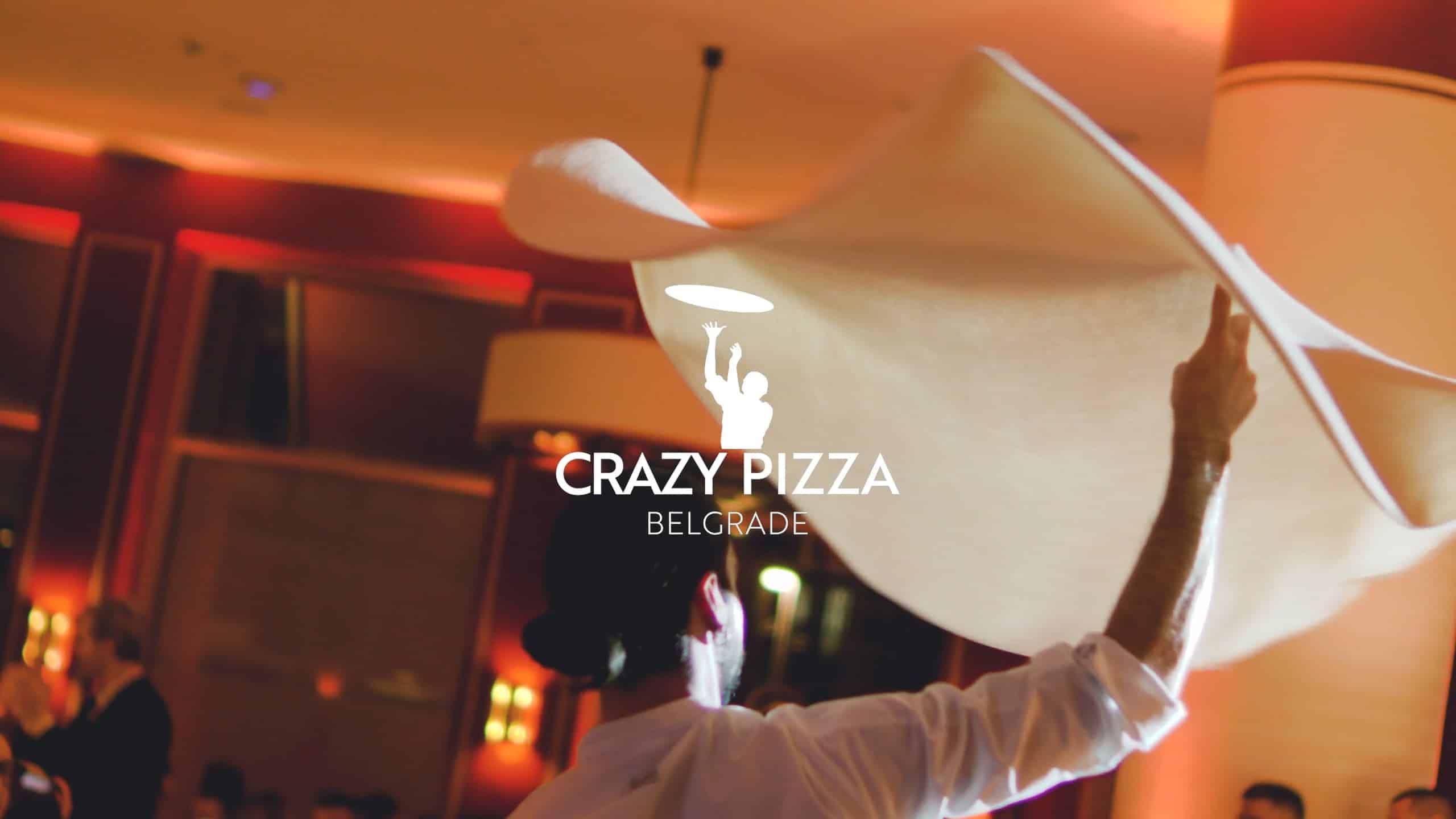
WE HAVE OPENED CRAZY PIZZA IN BELGRADE!
We organized the grand opening of the first restaurant of the world-renowned Crazy Pizza chain in Belgrade, a brand founded by Italian entrepreneur and media personality Flavio Briatore. As the team responsible for the complete marketing, digital campaign, and event organization, we achieved excellent results – a reach of 478,444 on the Meta […]