







How technology shapes the soul and logistics of the events industry?
Modern event management is moving far beyond mere form-filling, evolving instead into the strategic orchestration of emotion and audience dynamics. Through a blend of creativity, compelling narrative, design, and cutting-edge technology, space and moments are transformed into immersive experiences that engage all the senses.
Today, artificial intelligence is no longer just a flashy attraction, but a standard “copilot” that manages complex logistics, analyzes crowd flow, and drives smart matchmaking. Algorithms help create and balance budgets, solve logistical challenges, and proactively mitigate potential risks. Consequently, event organizers are stepping into a new role: becoming experience designers and curators of emotion.
Managing Cognitive Load
In a world where technology can project virtually anything, the modern organizer’s biggest challenge is no longer how to attract attention, but how to prevent sensory overload and balance focus in an era of hyper-stimulation.
A prime example is the MSG Sphere in Las Vegas. Its interior screen spans 15,000 square meters in 16K resolution, enveloping the audience from a height of 73 meters with over 250 million pixels. While it is easy to fascinate people with such performance metrics, it is even easier to exhaust them.
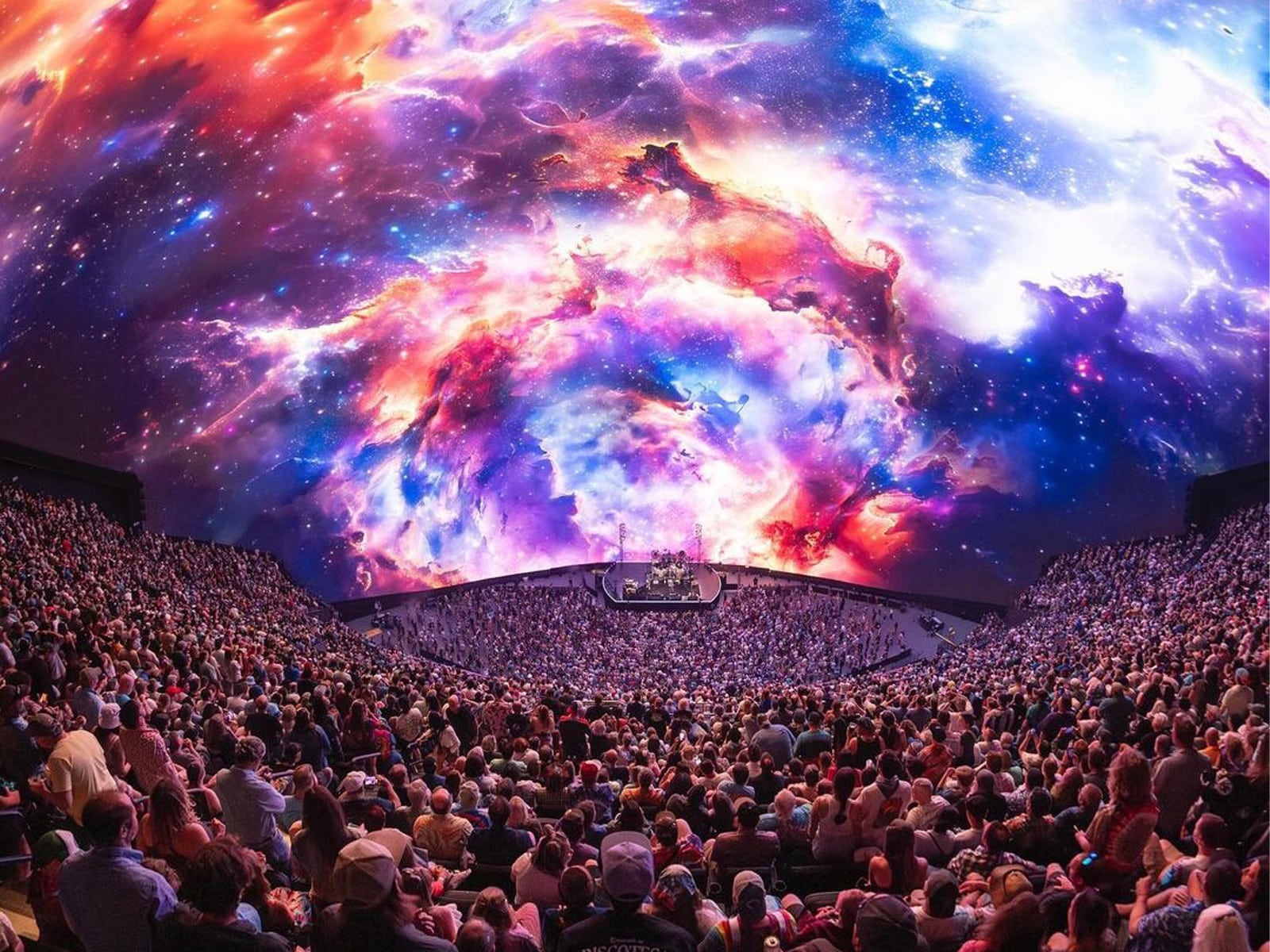
An experienced organizer today uses real-time data not to pile on more visual stimuli, but to intelligently manage energy within the space. Instead of linear scheduling and rigid timetables, the focus shifts to the strategic stewardship of attention and event dynamics. If audience analytics systems signal a drop in focus and fatigue in the room, the organizer can seamlessly adjust lighting intensity, audio frequencies, or the rhythm of the program. The event isn’t interrupted, but the audience’s attention is gently guided back to an optimal state. This is the subtle direction of human presence – a new, essential competency increasingly demanded of event professionals.
The New Engineering of Relationships
We all remember traditional networking: moments where hundreds of people awkwardly mingle and exchange business cards, hoping to randomly bump into the right person. The future of the industry introduces a new architecture built around targeted micro-moments.
Take Europe’s Web Summit, for example, which utilizes its proprietary software, Summit Engine. This ecosystem handles ticket sales, registration, and personalized attendee schedules under one roof. Its greatest value lies in smart networking: the system leverages advanced databases and AI to automatically recognize participant profiles, map out thousands of attendees, and connect promising startups with ideal investors, subtly guiding compatible participants to the same zone through tailored notifications. In doing so, technology transforms the logistical chaos of a massive conference into a seamless digital experience.
Digital Ecosystems
Contemporary metaverse events increasingly resemble living, three-dimensional digital ecosystems. Participants no longer join via standard video calls; instead, they create photorealistic avatars that move freely through virtual spaces.
A standout example is the Journee platform, built on Unreal Engine 5 and renowned for creating virtual worlds for brands like BMW and major fashion houses. Through pixel-streaming technology, visitors can jump straight into photorealistic virtual spaces from ordinary phones or computers, requiring no expensive hardware. Once there, they walk around as avatars and converse naturally thanks to spatial audio that only kicks in when they physically approach one another, just like in real life.
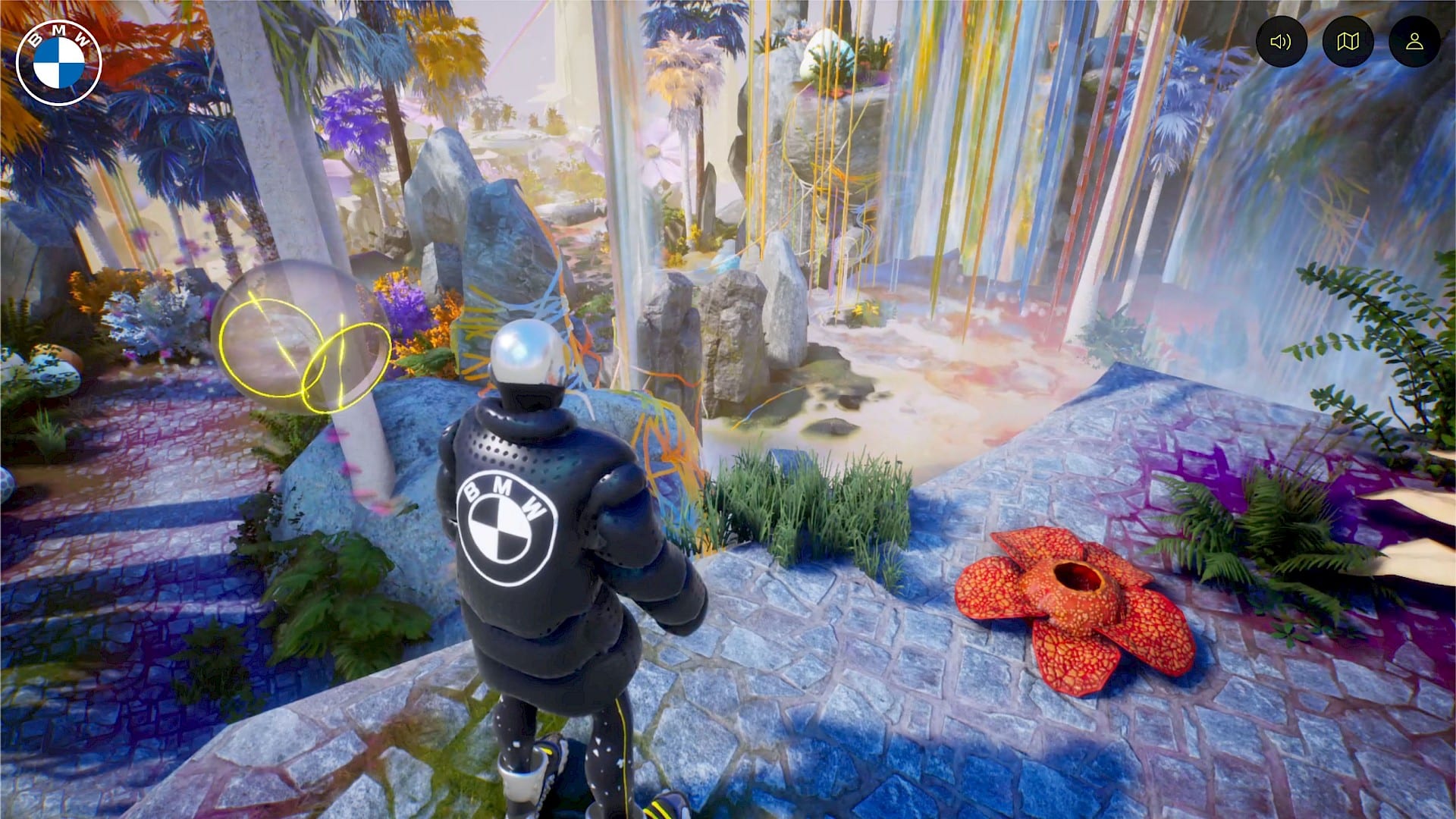
Simultaneously, background AI analyzes visitor movements in real time, shaping visual effects and fluid sculptures to match the crowd’s atmosphere. This technology has long outgrown its experimental phase and is now widely adopted for hybrid and online events, product launches, and exclusive forums.
The Luxury of the Analog Sanctuary
From this emerges the ultimate paradox of the digital age: at the exact moment technology can replicate any environment, its complete absence becomes the ultimate luxury.
Exclusive global forums and closed-door leadership sessions are increasingly opting for systems that physically prevent smartphone use. The Yondr pouch – a magnetically locking sleeve that keeps your phone with you but out of reach – has become a fixture in the live events industry. To date, over 20 million devices across more than 10,000 events have used this system, trusted by performers like Bob Dylan, Madonna, and Paul McCartney.
The task of the modern experience designer is to intentionally architect these “analog sanctuaries” – zones where all digital signals are actively blocked. Here, the audience ceases to be passive observers and becomes active creators of the moment: through voting, body movements, or real-time collaborative decision-making, they directly influence the direction of a panel, the outcome of a workshop, or the very look of the room.
When Optimization Becomes Manipulation
The transformation of this profession boils down to the ability to synchronize technological, spatial, and ambient tools in real time, turning them into a mechanism that evokes the desired psychological and emotional state within the audience.
However, a risk remains: in our pursuit of the perfectly optimized experience, we risk dehumanizing the gatherings themselves. If AI pre-calculates who we should talk to, sensors subtly modify the environment based on our heart rates, and algorithms eliminate every trace of unpredictability – where is the room for authentic human spontaneity?
When technology takes over decisions about what we listen to, how we feel, and who we shake hands with, events can easily slip from spaces of free exchange into sophisticated attention-manipulation machines. Therefore, the greatest skill for tomorrow’s organizers will not be figuring out how to implement technology, but knowing where to draw the line – preserving precious, unpredictable human imperfection as the most valuable element of any gathering.
Marketing trends: The new rules of the game
The near future brings significant changes to the world of marketing, with a focus on technological innovations and the evolution of consumer preferences. Experts predict that content personalization will become a key element for creating engaging experiences, while artificial intelligence will greatly shape marketing strategies, changing the way brands communicate with their audiences.
🤖 Martech + Adtech = The digital alliance that changes everything
The continuation of the ongoing digitalization trend brings a deeper symbiosis between marketing and technology, with new terminology that increasingly defines the theory and practice of the entire industry. Acronyms such as SGE, ADTECH, AISEO, CAC, VBC, KPI… are becoming more common in everyday business (P.S. We recommend looking them up—you might need them soon).
Two buzzwords hold a special place in today’s marketing vocabulary: Martech (marketing technology) focuses on tools and platforms that enable automation and improvement of marketing activities, while Adtech (advertising technology) manages digital advertising and enables precise user targeting. However, experts point out the diminishing distinction between Martech and Adtech, as these two areas increasingly intertwine, creating an integrated approach that connects marketing and advertising strategies into a unified ecosystem.
💡 Personalization + AI = The recipe for success
Marketing professionals predict that innovations in artificial intelligence will play a crucial role in shaping business strategies. According to recent research, over 60% believe AI and machine learning will have the greatest impact on marketing in the next five years, while data privacy and security remain key challenges.
In this context, so-called AI agents are increasingly mentioned—autonomous software systems that enhance personalization, workflows, and even marketing strategies without human intervention. These “agents” analyze problems, make decisions, and automatically optimize operations, enabling precise user targeting and efficient personalization in areas like e-commerce, sales, and customer support. For example, AI agents manage orders, send reminders about abandoned carts, and offer personalized recommendations. In sales, they identify potential clients, automate communication, and analyze competitors, while in customer support they efficiently solve issues like password changes or product returns.
🔐 But… there are challenges
Digital experts predict that the two biggest challenges in digital advertising will continue to be improving SEO (search engine optimization) and effectively managing various marketing channels such as search, social media, and other forms of advertising. Additionally, rising marketing costs and constantly tracking changing trends are among the biggest challenges ahead.
Interestingly, UN Secretary-General António Guterres, presenting priorities for 2025, warned that humanity has opened a “Pandora’s box of problems,” including “technology that has gotten out of control” and threatens our existence. Experts agree that AI models could become smarter and more powerful than humans, making it time to impose limits on their development.
📺 Brands as media
This year, one significant trend will be brands increasingly becoming like media houses—not only collaborating with content creators but becoming active producers of content themselves. Brands recognize the importance of direct communication with consumers on various platforms, increasing their influence and creating more authentic relationships with users. This trend, shaping 2025, responds to the decreasing effectiveness of traditional advertising forms that no longer reach consumers as before.
Creating content that engages audiences through authentic stories that resonate and build emotional connections is becoming a key strategy for leading brands. Branded content will remain an indispensable part of digital campaigns this year as well.
🤝 Game-changing collaborations
Collaboration between brands will be one of the key strategies for fostering innovation. Combining complementary brands allows the creation of unique experiences and products that companies couldn’t develop alone.
For example, Nike and Apple joined forces to create products combining sports gear and technology for tracking progress and health. BMW and Louis Vuitton collaborated to create luxury travel bags that perfectly complement car designs. Spotify and Starbucks merged music and coffee, enabling personalized playlists while enjoying coffee. Heinz and Absolut created an innovative product—a fusion of ketchup and alcohol—that started a new trend in the food and beverage industry.
These examples show how brands, through collaboration, can create products and experiences that would be unimaginable without joint investment and creativity.
🎯 Hyper-personalization is here
In 2025, hyper-personalization powered by artificial intelligence will be a crucial factor in marketing. While personalization has been popular in recent years, consumers will expect brands to know their desires and needs down to the smallest detail and provide personalized experiences in real-time. Video content will continue to dominate, especially among younger audiences seeking engaging, easy-to-understand, and quickly consumable content.
Advanced AI tools will transform video marketing, enabling high levels of personalization and precise targeting. These innovations, especially in live streaming and shoppable video content, will significantly boost retail growth and open new ways for brands to build deeper connections with consumers.
🎉 Events of the future: Digital, sustainable, unforgettable
The events industry in 2025 will continue its transformation through technology, sustainability, and personalization. Events will become increasingly tailored to participants, using AI to create concepts, personalized agendas, and authentic spaces. Sustainability will remain a focus, emphasizing recycled materials and reducing environmental footprints.
Extended reality (XR) will enhance experiences, while AI will automate processes like registration and facial recognition. Micro-events for smaller groups will enable deeper interactions, while storytelling will remain key for audience engagement. Multisensory technologies such as sound, light, and scent will create authentic “4D” experiences.
In 2025, events will merge technology, sustainability, and imagination, and as always, creativity will be the key to success in the industry. Original concepts, new ideas, and keeping up with trends and innovations will be a winning creative combination for unforgettable events.
⚠️ Impulsive marketing: You buy because they convince you you want it
However, technological changes and their social impact also bring certain side effects. Companies and brands shape consumer desires and needs, often creating habits not based on real needs but on emotions and social norms created through media. Through sophisticated marketing strategies such as targeted advertising and personalized content, brands skillfully identify consumer weaknesses, encouraging impulsive purchases and continuous consumption growth.
In a society constantly striving for new and better products, marketing becomes a tool that increasingly blurs the line between real and desired needs, turning consumerism into the main driving force of the economy. This is something to consider in the times ahead.